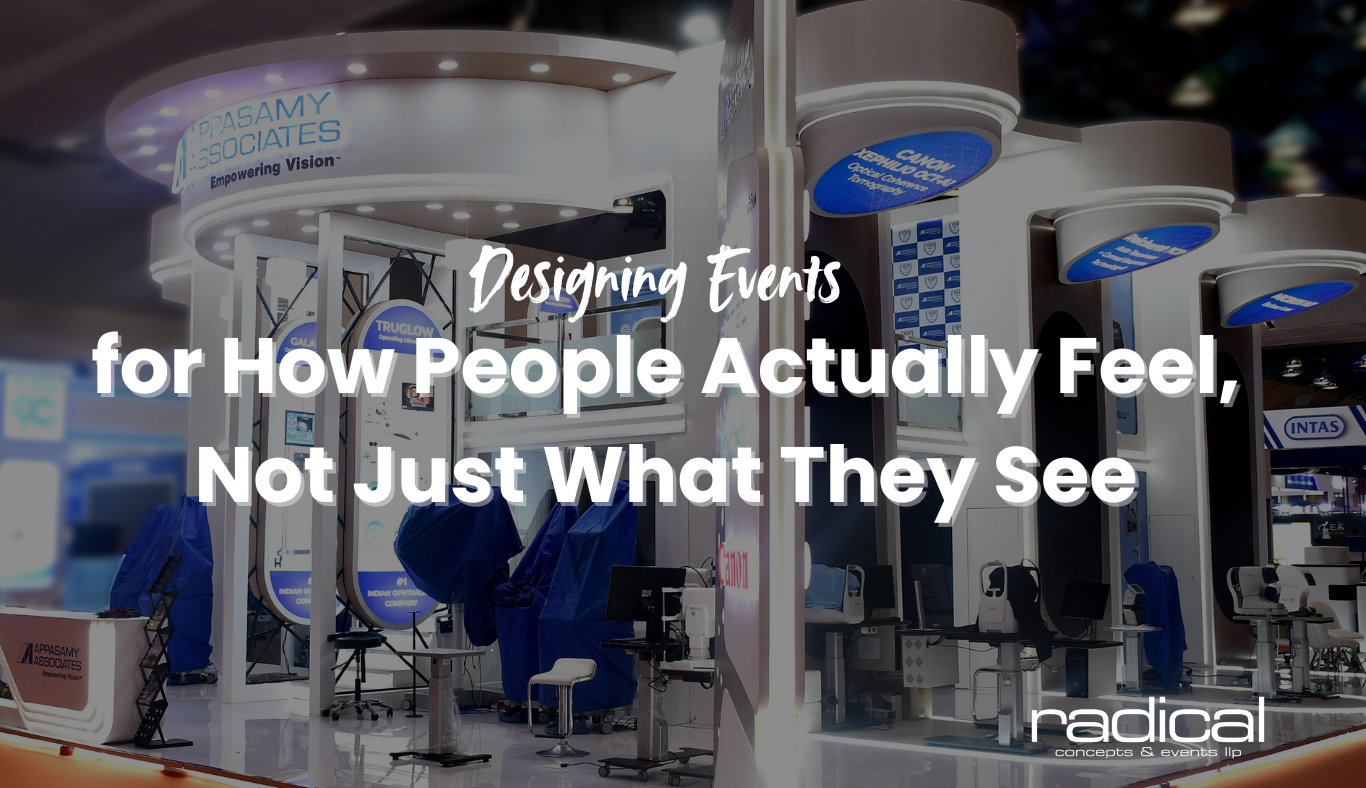


In the future of experiential marketing, visual appeal alone
is no longer enough. At Radical Concepts & Events LLP, we believe
the most successful events are designed around human emotions, not just
impressive aesthetics. As audiences become more experience-driven in 2026,
they are far more likely to remember how an event made them feel than
what it looked like.
This shift is redefining modern event strategy, where
emotional engagement has become just as important as creative execution. The
events that create genuine human connection will always leave the strongest and
longest-lasting impression.
The Evolution from Visual Design to Emotional Design
For years, event success was associated with grand stages,
stunning lighting, and visually impressive installations. While these elements
still play an important role, they represent only one part of the attendee
experience.
Today's audiences seek:
Modern event design is evolving from "What will
people see?" to "What will people feel?"
Why Emotion Creates Lasting Brand Impact
People naturally remember experiences that create emotional
responses.
An event that makes attendees feel:
will create stronger brand recall than one that simply looks
impressive.
Scientific studies consistently show that emotions influence
memory, trust, and decision-making—making emotional design one of the most
valuable investments in experiential marketing.
Designing Every Touchpoint Around Human Experience
Every stage of an event contributes to the attendee's
emotional journey.
Successful event experiences are carefully designed through:
A Warm First Impression
Smooth registrations, welcoming staff, intuitive navigation,
and thoughtful hospitality immediately reduce stress and create a positive
mindset.
Immersive Storytelling
Rather than simply presenting information, brands use
storytelling to create emotional resonance throughout the attendee journey.
Interactive Participation
Workshops, collaborative discussions, live demonstrations,
and networking activities make attendees active participants instead of passive
observers.
Comfort-Driven Spaces
Quiet lounges, wellness areas, flexible seating, and
intuitive layouts improve comfort and encourage meaningful conversations.
Personalized Experiences
Customized agendas, AI-powered recommendations, and
audience-specific interactions help attendees feel recognized and valued.
From Aesthetic Excellence to Emotional Intelligence
Modern event strategy is increasingly guided by emotional
intelligence.
Instead of asking:
Leading event planners now ask:
This shift changes how success is measured.
The Business Value of Emotion-Led Event Design
Designing events around emotions delivers measurable
business benefits.
Brands that prioritize emotional experiences often achieve:
When attendees feel emotionally connected, they become more
likely to recommend the brand, return to future events, and build lasting
business relationships.
The Radical Approach: Human-Centered Event Design
At Radical Concepts & Events LLP, every event
begins with one fundamental question:
"How do we want people to feel?"
Our event strategy combines:
By designing around emotions first, we create events that
are memorable, meaningful, and business-focused.
Why Emotional Experience Will Define Event Success in
2026
As technology continues to automate registrations,
personalization, and analytics, emotion becomes the true differentiator.
The events that succeed in 2026 will be those that:
Because while technology can optimize an event, only
human-centered design can make it unforgettable.
Conclusion
The future of event design is not simply about creating
beautiful spaces—it is about creating meaningful experiences.
At Radical Concepts & Events LLP, we believe
successful events combine creativity with empathy, strategy with emotion, and
technology with genuine human connection.
Because people may forget the stage design, the lighting, or
the décor—but they will always remember how your event made them feel.
Radical Concepts & Events defies clichés, pioneering a meaningful, fresh approach to Events and Exhibitions.

Copyright Radical Concepts & Events LLP 2024 All Rights Reserved
Design and developed by 