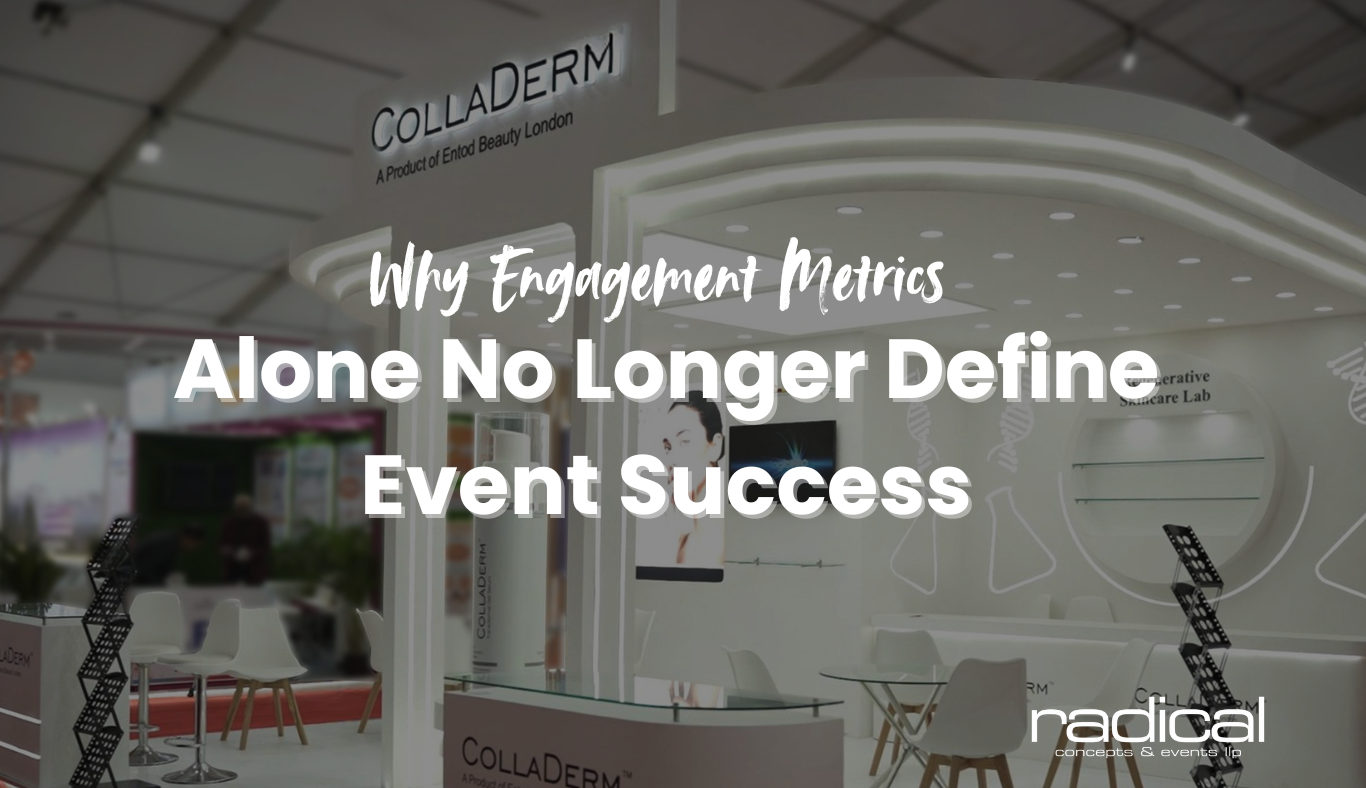


As the events industry evolves, so does the way success is
measured. At Radical Concepts & Events LLP, we believe that
traditional event metrics—such as attendance, session participation, social
media mentions, and engagement rates—are no longer enough to determine an
event's true business impact.
In 2026, organizations are shifting from measuring activity
to measuring outcomes. While engagement remains an important indicator,
the real question has become: Did the event create lasting business value?
The Evolution of Event Measurement
For many years, event success was evaluated using numbers
like:
Although these metrics provide useful operational insights,
they only measure what happened during the event—not what happened
because of the event.
Today's business leaders expect events to contribute
directly to marketing, sales, customer relationships, and long-term brand
growth.
From Engagement to Business Outcomes
Modern event strategies focus on measuring outcomes that
continue well beyond the closing session.
Brands now ask questions like:
These questions reflect a shift from measuring participation
to measuring business impact.
The New KPIs Defining Event Success
In 2026, successful event measurement includes both
quantitative and qualitative metrics.
Leading organizations now evaluate:
Brand Perception
Understanding how the audience views the brand before and
after the event.
Audience Sentiment
Measuring emotional response through surveys, AI sentiment
analysis, and attendee feedback.
Lead Quality
Prioritizing qualified opportunities over large volumes of
contacts.
Customer Retention
Evaluating how events strengthen existing customer
relationships.
Community Growth
Tracking ongoing engagement through post-event communities,
newsletters, webinars, and digital platforms.
Revenue Contribution
Connecting event participation with measurable business
outcomes and pipeline growth.
Why Quality Matters More Than Quantity
A successful event isn't necessarily the one with the
largest audience.
Sometimes:
can create significantly more value than thousands of social
impressions.
This shift encourages brands to focus on meaningful
engagement instead of vanity metrics.
Using Data to Measure Long-Term Impact
Modern event analytics combine multiple data sources to
provide a complete performance picture.
These include:
Together, these insights help organizations understand how
an event contributes to business growth over time.
The Radical Approach: Measuring What Truly Matters
At Radical Concepts & Events LLP, we believe
every event should be evaluated against clear business objectives.
Our approach includes measuring:
This ensures that every event is designed not only to
attract attention—but also to create measurable value.
Why This Will Define Event Success in 2026
As businesses become increasingly focused on ROI and
long-term growth, event measurement must evolve.
The most successful events will:
Engagement will remain important—but it will no longer be
the final measure of success.
Conclusion
The future of event measurement is about balancing
engagement with impact.
At Radical Concepts & Events LLP, we believe successful
events should do more than capture attention—they should influence decisions,
strengthen relationships, and contribute to long-term business success.
Because in 2026, event success will no longer be
defined by how many people interacted—it will be defined by how those
interactions created lasting value.
Radical Concepts & Events defies clichés, pioneering a meaningful, fresh approach to Events and Exhibitions.

Copyright Radical Concepts & Events LLP 2024 All Rights Reserved
Design and developed by 