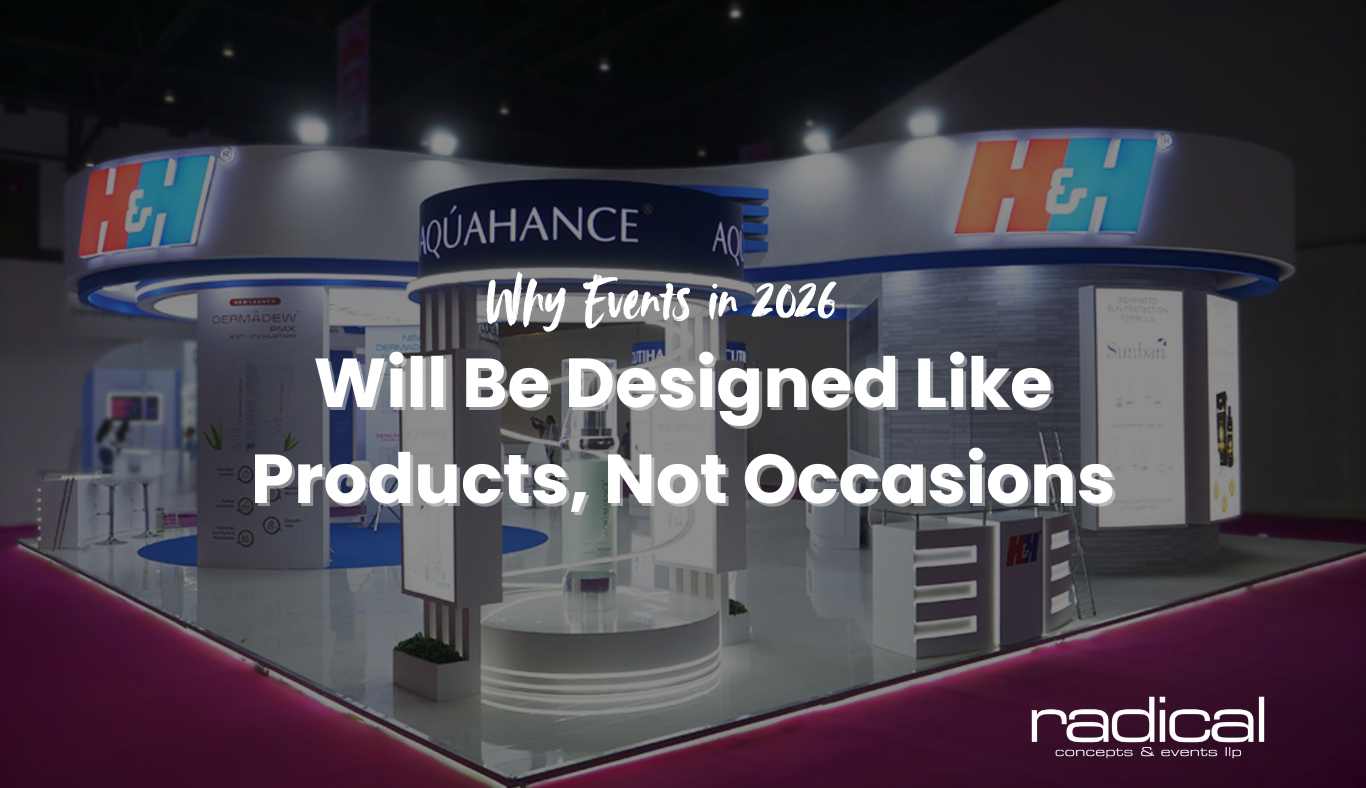


Why Events in 2026 Will Be Designed Like Products, Not
Occasions
In the evolving world of brand experiences, events are
undergoing a fundamental shift. At Radical Concepts & Events LLP, we
see a clear change in how successful events are being planned, delivered, and
measured. By 2026, events will no longer be treated as one-time
occasions — they will be designed, tested, refined, and scaled like products.
This transformation is being driven by rising audience
expectations and the growing demand for measurable business impact.
Brands can no longer afford to treat events as standalone moments. They must
function as strategic platforms.
From One-Time Moments to Experience Products
Modern audiences behave like product users. They expect:
Just like a product, an event now needs:
When events fail to deliver this, they feel fragmented,
outdated, or disconnected from business goals.
Designing the Event User Journey
Product-led thinking forces event planners to ask better
questions:
From registration flows and entry experience to session
design, networking, content access, and post-event engagement — every
touchpoint must be intentional.
As one of the top Indian event management companies,
Radical Concepts & Events LLP designs events with the same discipline used
in product design — ensuring clarity, continuity, and usability throughout the
experience.
Feedback, Data & Continuous Improvement
Products evolve through testing and iteration — and events
must do the same.
Designing events like products means:
Each event becomes a version upgrade — smarter, more
refined, and more effective than the last. This approach replaces guesswork
with insight and ensures long-term engagement, not short-lived
attention.
Why This Matters for Brands in 2026
Product-led events help brands:
Whether brands are hosting corporate events, trade shows,
leadership summits, or industry expos, this mindset separates modern
experience leaders from those still operating in the past.
The Radical Approach: Events as Platforms
At Radical Concepts & Events LLP, we believe events in
2026 will succeed only when they are:
When events are built like products, they stop being moments
and start becoming platforms — delivering consistent value, clarity, and
long-term impact.
Conclusion
The future of events is not episodic — it is product-driven.
By treating events as evolving experiences rather than
one-time occasions, brands can create deeper relationships, measurable
outcomes, and scalable engagement ecosystems. And in 2026, that mindset will
define who leads and who gets left behind.
Radical Concepts & Events defies clichés, pioneering a meaningful, fresh approach to Events and Exhibitions.

Copyright Radical Concepts & Events LLP 2024 All Rights Reserved
Design and developed by 