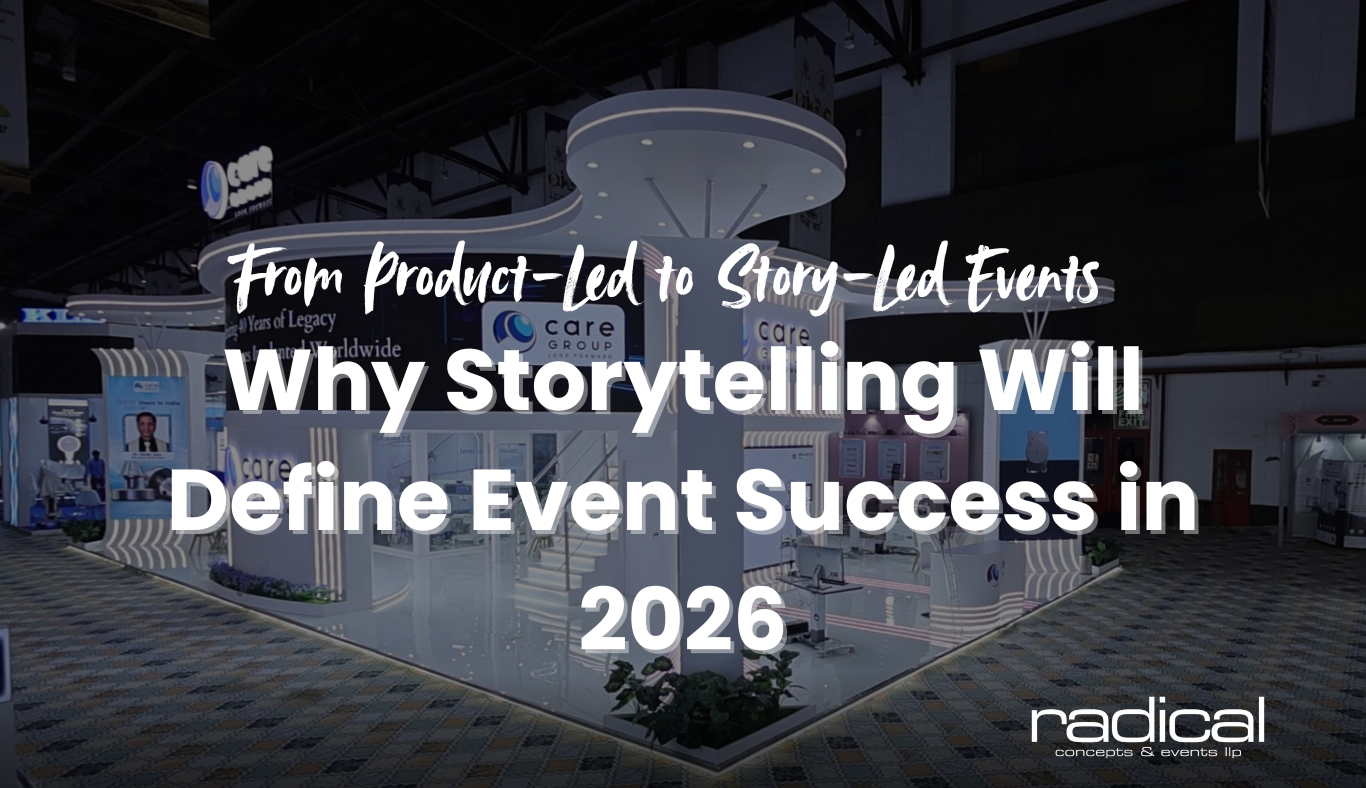


The way brands design events is undergoing a fundamental
shift. At Radical Concepts & Events LLP, we are seeing traditional product-led
activations—focused on features and displays—being replaced by story-led
experiences that create deeper audience connections.
In 2026, successful events will not be defined by how
much they showcase, but by how meaningfully they communicate.
Storytelling is no longer just a creative layer—it is becoming a strategic
foundation for event design.
Why Product-Led Events Are Losing Impact
For years, events focused heavily on showcasing product
features, specifications, and demonstrations. While informative, this approach
often lacks emotional engagement.
Modern audiences now expect:
Product-led events can feel transactional. Without a
compelling narrative, they struggle to hold attention, create recall, or build
lasting relationships.
The Rise of Story-Led Event Experiences
Story-led events shift the focus from what the product is
to why it matters.
Instead of presenting features, storytelling helps brands
communicate:
This approach transforms events into guided experiences,
where attendees move through a narrative rather than passively observing
displays.
Designing Events Around a Narrative
When an event is built around a story, every element becomes
part of a larger journey.
Key storytelling touchpoints include:
This creates a cohesive and immersive experience,
making the event easier to understand, engage with, and remember.
Why Story-Led Events Drive Better Engagement
Storytelling enhances:
Attendees are more likely to:
This leads to stronger visibility and deeper impact.
From Engagement to Business Results
Story-led events don’t just improve experience—they improve outcomes.
By building trust and relevance, storytelling helps:
In a competitive B2B environment, this shift from awareness
to relationship-building is critical.
The Radical Approach: Story as Strategy
At Radical Concepts & Events LLP, we treat
storytelling as a strategic framework, not just a creative element.
Our approach focuses on:
We design events where every touchpoint contributes to a clear,
meaningful story.
Why Storytelling Will Define Event Success in 2026
Events in 2026 will need to:
Story-led design enables all three by creating experiences
that resonate, not just impress.
Conclusion
The future of events belongs to meaningful experiences,
not just visual displays.
Brands that embrace storytelling will create events that
are:
Because in 2026, the events that outperform will not be the
ones that show more—they will be the ones that mean more.
Radical Concepts & Events defies clichés, pioneering a meaningful, fresh approach to Events and Exhibitions.

Copyright Radical Concepts & Events LLP 2024 All Rights Reserved
Design and developed by 